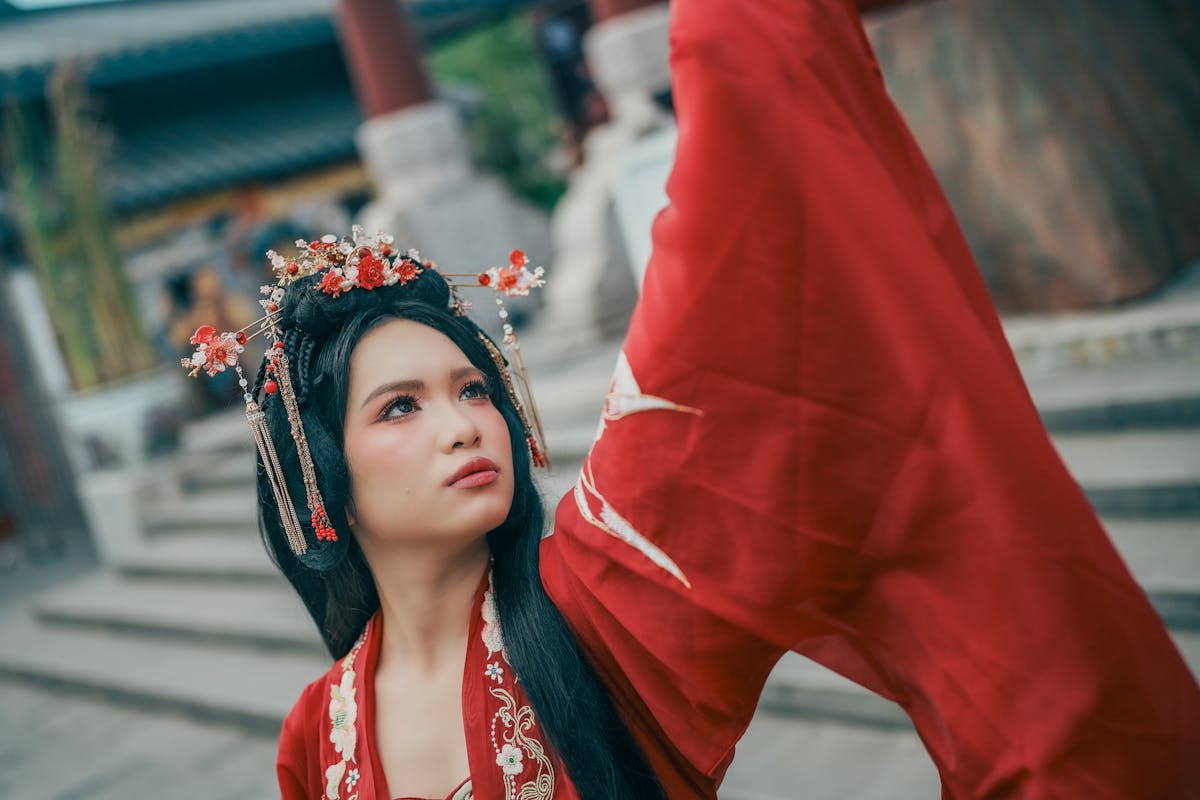
Chinese drama characters are remembered for their performances, their storylines, and — in ways that often surprise Western audiences — their wardrobes. A great costume can define a character as completely as dialogue. When we remember Bai Qian from Eternal Love or Minglan from The Story of Ming Lan, we remember them in specific garments, in specific colors, moving through spaces that their costumes help define.
This list ranks the ten best-dressed C-drama characters based on wardrobe cohesion, costume design innovation, cultural impact, and the sheer volume of "same style" searches they generated. These are the characters whose wardrobes became cultural events.
For in-depth drama reviews and episode guides for every show on this list, visit CDramaPedia.
10. Gu Sheng Nan — Nothing But Thirty (2020)
Played by Jiang Shuying, Gu Sheng Nan represented a new kind of C-drama fashion character: the modern professional whose wardrobe tells the story of her ambition. The costume team built her closet entirely from identifiable retail pieces — COS blazers, Toteme trousers, Celine bags — creating a wardrobe that viewers could actually replicate. Her transition from aspirational junior employee to confident department head was tracked through subtle wardrobe shifts: looser fits gave way to sharper tailoring, muted tones brightened, and her accessories moved from high-street to luxury. The character single-handedly drove COS's brand awareness in China.
9. Wei Wuxian — The Untamed (2019)
Read Xiao Zhan's full artist profile on Idol Mandarin.
Xiao Zhan's Wei Wuxian required two distinct wardrobes: the bright, playful reds and whites of his youth, and the stark blacks and grays of his darker reincarnated persona. Costume designer Liu Jie used color as narrative architecture — the shift from warm to cold tones told the character's story before any dialogue could. The black outer robe with red inner lining, revealed during movement, became one of the most recognizable costume elements in modern C-drama. Cosplay reproductions of Wei Wuxian's wardrobe remain the best-selling C-drama costume category on Taobao, five years after the show aired.
8. Lin Zhixiao — Go Ahead (2020)
Tan Songyun's wardrobe in Go Ahead achieved something rare: it made ordinariness beautiful. The character, a working-class young woman in a small city, wore Uniqlo basics, secondhand jackets, and simple canvas sneakers. The costume designer resisted every temptation to glamorize, instead building a wardrobe that was authentically modest yet visually harmonious. The pastel palette — soft pinks, pale blues, cream whites — gave the character a gentle visual signature that contrasted powerfully with the show's emotional intensity.
7. Hua Mulan — Mulan: Rise of a Warrior (2020)
This refers specifically to the drama series adaptation, where the costume department created a military wardrobe that was both historically informed and dramatically effective. The leather armor, based on Northern Wei Dynasty cavalry equipment, was constructed from genuine leather with brass riveting — no foam or plastic substitutes. Mulan's transformation from farm girl to warrior general was expressed through progressively more elaborate armor, culminating in a gold-accented ceremonial set that acknowledged her dual identity as both woman and soldier.
6. Xu Feng — Ashes of Love (2018)
Deng Lun's fire deity required a wardrobe that conveyed supernatural power without descending into campiness. The solution was restrained grandeur: predominantly black and deep crimson robes with flame motifs rendered in gold thread so fine they were invisible in wide shots but revealed in close-ups. The celestial armor for battle sequences incorporated hand-beaten copper elements and silk sashes that moved like fire in wind machines. The character's costume evolution — from pristine celestial white through corrupted charcoal to redemptive gold — was a complete narrative expressed through wardrobe alone.
5. Sheng Minglan — The Story of Ming Lan (2018)
Zhao Liying's Minglan wore the most historically disciplined wardrobe on this list. Costume designer Zhang Shuping consulted Song Dynasty textile records to create a wardrobe that prioritized period accuracy over drama. The result was a study in restrained elegance — narrow sleeves, muted indigo and celadon palettes, minimal embroidery, and fabrics with the subtle texture of hand-woven silk. The character's rising social status was expressed through almost imperceptible changes: slightly richer fabric, marginally wider sleeves, one additional layer. It was costume design as literature.
4. Tantai Jin — Till The End of The Moon (2023)
Luo Yunxi's dual-nature character demanded a wardrobe that expressed both vulnerability and menace. The costume team created a black-and-silver palette for his demonic persona — robes that appeared to absorb light, with silver embroidery visible only in motion — and a softer, warmer palette of blues and whites for his mortal incarnation. The key innovation was the use of thermochromic threads in certain costume elements, causing subtle color shifts under different lighting conditions. The transformation scenes, where the wardrobe appeared to change color as the character's nature shifted, became viral moments.
3. Bai Qian — Eternal Love (2017)
Yang Mi's Bai Qian set the template for modern xianxia heroine fashion. The white and pale blue robes, with flowing sleeves and trailing hems, established a visual language that every subsequent xianxia production has referenced. The costume's genius was in its simplicity — where other fantasy characters were buried under embellishment, Bai Qian's wardrobe relied on the purity of white silk, the precision of pleating, and the architecture of layering. The "Bai Qian white" became a named color reference in Chinese fashion, and white hanfu sales reportedly increased 340% during the show's original run.
2. Chu Wanning — Immortality (2023)
The wardrobe for Luo Yunxi's second appearance on this list was a masterclass in how costume design can communicate character psychology. Chu Wanning's strict, high-collared white robes — never loosened, never wrinkled, always precisely layered — expressed the character's emotional repression more effectively than any dialogue. The costume team created 47 variations of his "standard" white robe, each with subtle differences in collar height, sleeve width, and fabric weight that corresponded to the character's emotional state in each scene. Viewers who rewatch notice these details.
1. Wei Zhi — Nirvana in Fire (2015)
Hu Ge's Mei Changsu, disguised as Wei Zhi, wore what many consider the most perfectly conceived wardrobe in C-drama history. The character — a brilliant strategist concealing a terminal illness — required clothing that communicated intelligence, frailty, and hidden strength simultaneously. The costume team achieved this through layering: multiple thin inner garments that suggested physical vulnerability, covered by scholar's robes of increasingly authoritative cut as the character consolidated power. The palette progressed from sickly whites and grays to deeper blues and eventually to the royal plum that marked his final triumph. Every single costume element served the narrative. It remains the gold standard.
The Common Thread
What distinguishes these wardrobes from mere "good costumes" is intentionality. In every case, the costume designer used clothing as a narrative instrument — telling stories that complemented, and sometimes surpassed, the script. The best C-drama wardrobes are not worn by characters. They are inseparable from them.
Collect replica costumes and accessories inspired by these iconic characters at Pandafame. For detailed collector guides and merchandise reviews, visit Fandom Collection.
Last updated: 2026-03-28. Rankings reflect CDrama Style editorial analysis and audience engagement metrics.
Tags