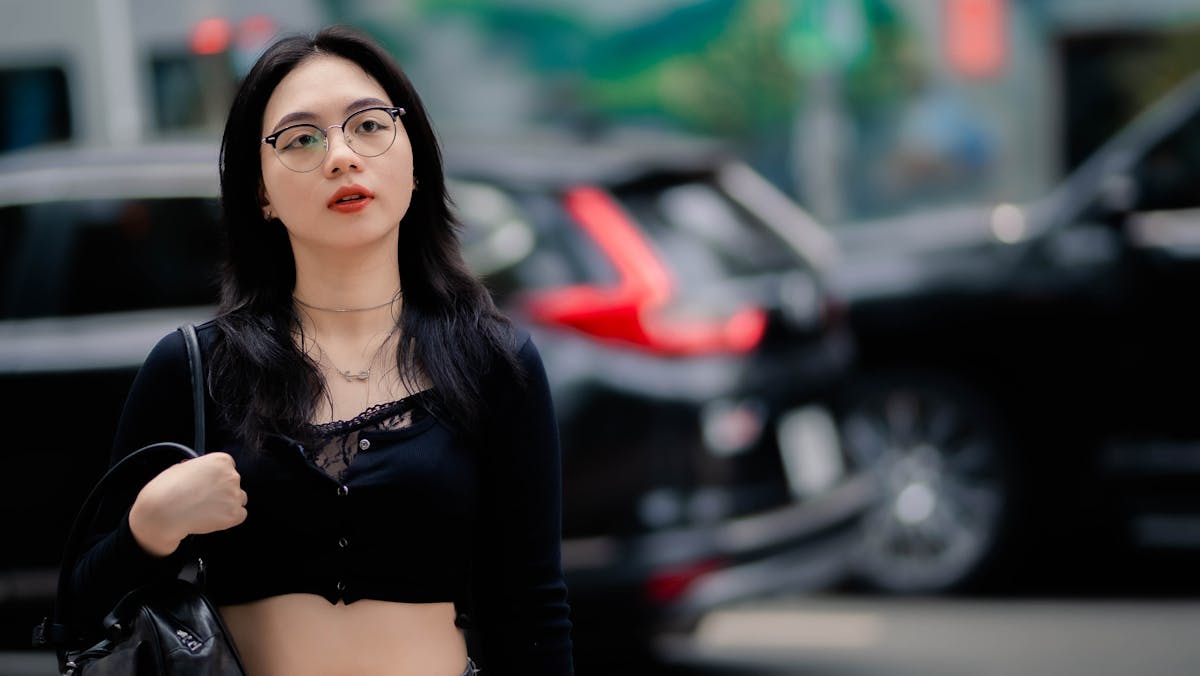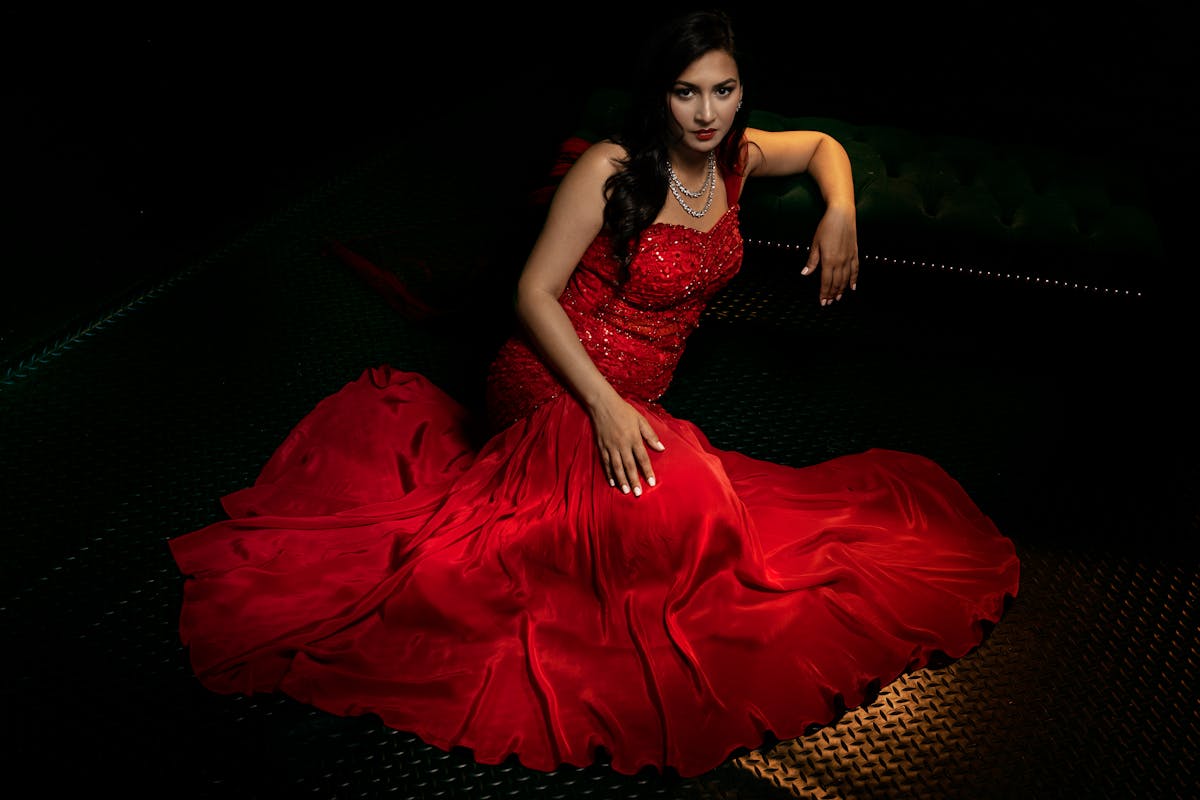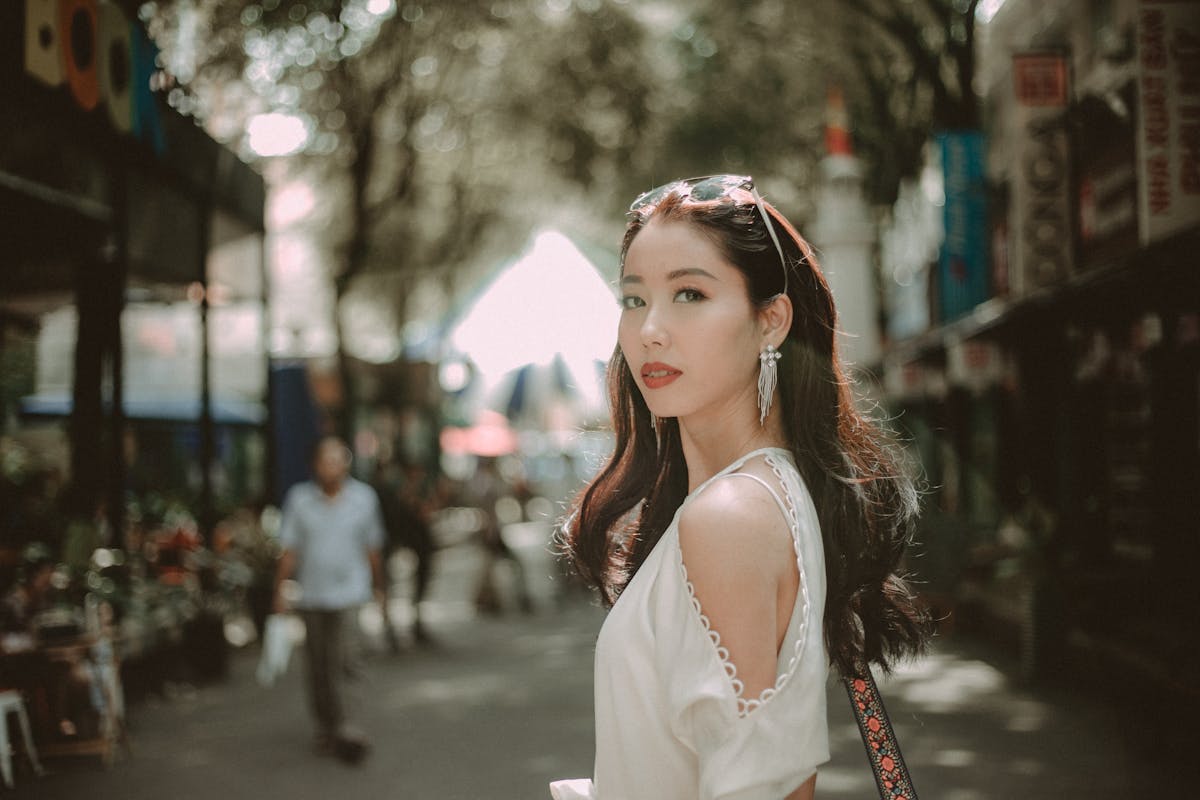
Outside the Prada show at Shanghai Fashion Week in October 2025, a photographer captured a young woman wearing a cropped leather jacket over a floor-length pleated chiffon skirt in dusty rose, with combat boots and layered gold chains. The image went viral on Xiaohongshu with the caption: "When your street style is basically a C-drama lead walking through modern Shanghai."
She was not wrong. Chinese drama aesthetics — the flowing layers, the controlled color palettes, the dramatic silhouettes, the deliberate tension between softness and structure — have migrated from screen to street in ways that are reshaping fashion in Shanghai, Seoul, Tokyo, and increasingly in Western cities with large Asian diaspora populations.
The Visual Grammar of Drama-Influenced Street Style
C-drama-influenced street fashion does not look like cosplay. It does not involve wearing hanfu to the grocery store. Instead, it borrows principles from drama costume design and applies them to contemporary clothing:
- Layering with purpose — Multiple visible layers creating depth, borrowed from the multi-garment construction of historical Chinese dress. A sheer outer layer over an opaque inner layer. A structured jacket over a flowing dress. The layers are meant to be seen, not concealed.
- Color storytelling — Monochromatic or closely related color families within a single outfit, echoing the way drama costume designers assign color palettes to characters. All-black with burgundy accents. Cream and gold. Muted sage from head to toe.
- Fabric contrast — Mixing textures within an outfit: leather with chiffon, denim with silk, structured wool with flowing cotton. This mirrors the drama technique of combining rigid outer garments with soft inner layers.
- Dramatic proportion — One oversized or elongated element that anchors the silhouette: a floor-length coat, exaggerated wide-leg trousers, a dramatically oversized scarf. The drama influence is visible in the scale of the statement piece.
Shanghai: Ground Zero
Shanghai's street fashion has always operated at the intersection of Western and Chinese aesthetics, but the past three years have seen a decisive tilt toward drama-influenced styling. The Julu Road and Wukang Road neighborhoods — traditional street style photography locations — now feature a noticeably higher proportion of looks that reference Chinese historical dress, whether through silhouette, fabric, or accessory choices.
The "new Chinese style" (xin zhongshi) movement, which began as an interior design trend, has fully crossed into fashion. Brands like Shushu/Tong, Ming Ma, and Pronounce have built their aesthetics around reinterpreting Chinese design elements for contemporary wear. Their runway collections are explicitly influenced by drama costume design — Shushu/Tong's Spring 2026 collection referenced the layering structure of Tang Dynasty ruqun, while Ming Ma's deconstructed tailoring draws from the asymmetric closures of Ming Dynasty court garments.
Seoul and Tokyo: Cross-Pollination
The influence extends beyond China's borders. In Seoul, the overlap between K-drama and C-drama fashion has created a shared visual vocabulary that appears in Dongdaemun street style. Korean fashion consumers, who have been watching Chinese dramas on platforms like Viki and Netflix for years, are incorporating C-drama-inspired elements — particularly flowing layers and muted, sophisticated palettes — into outfits that also draw from Korean minimalism.
In Tokyo's Omotesando and Daikanyama districts, the influence is more specific. Japanese fashion consumers have long appreciated Chinese textile traditions, and the C-drama-inspired trend manifests primarily through fabric choices: silk blouses, jacquard accessories, and embroidered details that reference Chinese motifs without literal reproduction.
Key Pieces Driving the Trend
The Oversized Trench (with Eastern Proportions)
The trench coat, reimagined with wider sleeves and a longer hem that approaches the floor, has become the signature outerwear piece of drama-influenced street style. Unlike the fitted Western trench, this version hangs open and moves with the wearer — mimicking the visual effect of a flowing outer robe. Brands from Lemaire to COS to Zara have produced versions that cater to this aesthetic.
The Mandarin Collar in Modern Context
The mandarin collar (also called the band collar or standing collar) has moved from its association with formal cheongsam into everyday shirts, blouses, and jackets. Worn buttoned to the top with relaxed trousers and flat shoes, it creates a look that is distinctly Chinese in reference without being costume-like. Uniqlo and Muji's regular mandarin-collar offerings have become wardrobe staples for this aesthetic.
The Wide-Leg Trouser
Wide-leg trousers in flowing fabrics — linen, crepe, lightweight wool — have become the default bottom for drama-influenced street style. The proportions are deliberately generous: the trouser should move visibly when walking, creating the swaying effect associated with historical dress. The waist is typically positioned high and belted, echoing the elevated waistline of Tang Dynasty ruqun.
Statement Hair Accessories
Shop authentic Chinese-inspired hair accessories, buyao hairpins, and drama-style jewelry at Pandafame.
Hairpins, combs, and structured hair accessories have surged in popularity as the most accessible entry point to drama-influenced styling. Modern versions of the traditional buyao (dangling hairpin) and zanzi (straight hairpin) are sold on Taobao and Etsy, designed to work with contemporary hairstyles. Even simple metal hair clips, worn in asymmetric arrangements, carry a visual reference to period drama styling.
The Brands to Watch
- Shushu/Tong — Shanghai-based, specializing in feminine silhouettes with Chinese construction references
- Ming Ma — Deconstructed tailoring influenced by Chinese court dress
- Pronounce — Genderless design with Chinese textile traditions
- Tangli — Explicitly hanfu-modern fusion, available on Taobao
- Zhiyun — Modern Chinese aesthetics at accessible prices
- Ms MIN — Luxury modern Chinese womenswear
- Uma Wang — Textural, layered pieces that resonate with drama aesthetics
Where This Goes
The integration of C-drama aesthetics into global street fashion is not a trend in the conventional sense — it does not have an expiration date. It represents a deeper shift in which Chinese visual culture, transmitted through the mass reach of streaming platforms, is becoming part of the shared design vocabulary of global fashion. The flowing layers, the color discipline, the fabric awareness, the dramatic proportion — these are not temporary preferences. They are design principles that enrich the options available to anyone who gets dressed with intention.
For reviews of the dramas inspiring these street fashion trends, visit CDramaPedia. Explore full artist profiles of the celebrities driving these trends on Idol Mandarin.
Last updated: 2026-03-28. CDrama Style tracks the intersection of Chinese entertainment and global fashion culture.
Tags