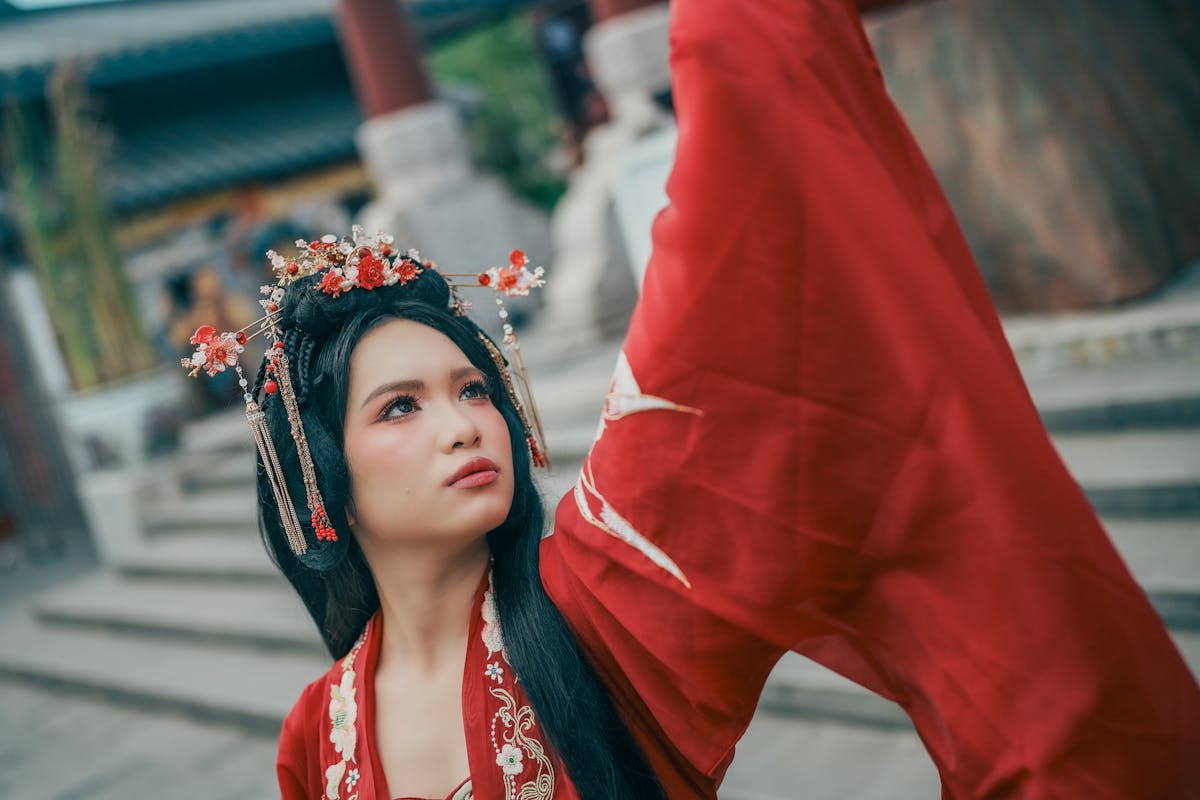
The hanfu revival movement has grown from a niche cultural interest into a mainstream fashion phenomenon, propelled in large part by the visual splendor of Chinese period dramas. Dramas like The Story of Ming Lan, Nirvana in Fire, and Love Like the Galaxy have introduced millions of viewers to the aesthetics of traditional Chinese dress — and an increasing number of those viewers want to translate what they see on screen into their daily wardrobes.
This guide is not about historical accuracy or cosplay. It is about extracting the design principles that make drama hanfu visually compelling and applying them to modern clothing that you can wear to work, to dinner, or walking through the city on a Saturday afternoon.
Understanding the Core Silhouettes
Before adapting anything, it helps to understand the three silhouettes that dominate C-drama period fashion:
- The Ruqun (upper garment + skirt) — A fitted or semi-fitted top paired with a high-waisted, flowing skirt. This is the most adaptable silhouette for modern fashion, as it translates directly to contemporary high-waisted skirt combinations.
- The Daxiushan (wide-sleeve robe) — A voluminous outer layer with dramatic sleeves, worn over fitted inner layers. In modern terms, think of it as an oversized coat or kimono-style jacket layered over slim basics.
- The Beizi (open-front long vest) — A sleeveless or short-sleeved outer layer that falls below the knee. This is essentially a modern duster or longline vest — already a staple in contemporary fashion.
The Color Palette Approach
C-drama costume designers use color with extraordinary intention. Rather than copying specific colors, extract the palette logic that makes drama wardrobes cohesive:
- Tang Dynasty palette — rich, saturated tones: persimmon orange, deep teal, plum, gold. Modern equivalent: jewel-toned separates. A teal silk blouse with a persimmon midi skirt creates immediate drama.
- Song Dynasty palette — muted, sophisticated neutrals: celadon, dove gray, soft cream, faded indigo. Modern equivalent: COS, Aritzia, and Uniqlo U collections frequently feature this tonal range.
- Ming Dynasty palette — bold contrasts: cobalt and white, red and black, gold and deep green. Modern equivalent: color-blocking with high-contrast pairings.
- Xianxia fantasy palette — ethereal pastels and metallics: ice blue, lavender, silver, pearl. Modern equivalent: bridesmaid-adjacent palettes from brands like Zimmermann and Self-Portrait.
Five Practical Outfit Formulas
1. The Modern Ruqun
What to buy: A wrap-style or crossover-collar blouse in silk or satin (brands like Equipment, Sezane, or affordable options from Mango and H&M). Pair with a high-waisted, wide-leg trouser or A-line midi skirt. Add a thin belt or ribbon at the natural waist, positioned higher than you normally would — this mimics the elevated waistline of Tang Dynasty ruqun.
The finishing detail: A pendant necklace on a long chain, hanging at the sternum. This echoes the jade pendants that feature prominently in period drama costumes.
2. The Layered Scholar
What to buy: A longline linen or cotton jacket (unstructured, no shoulder pads), a fitted turtleneck or mandarin-collar shirt, and wide-leg trousers. The jacket should be at least knee-length and ideally have a slightly oversized fit. Brands like Muji, Uniqlo, and COS offer excellent options.
The finishing detail: A simple fabric belt or sash tied at the waist over the jacket, creating the overlapping-layer effect seen in scholarly character wardrobes. Use a linen or cotton belt in a contrasting earth tone.
3. The Celestial Layer
What to buy: A sheer organza or chiffon duster coat in a pale color (ice blue, lavender, blush). Layer over a monochrome base — white T-shirt and cream wide-leg pants, or a slip dress. The sheer outer layer creates the ethereal floating effect that defines xianxia costumes.
Where to find it: Zara and Massimo Dutti regularly produce sheer longline pieces. For higher quality, look at Cos, Arket, or dedicated hanfu-modern fusion brands like Tangli and Zhiyun on Taobao.
4. The Power Consort
What to buy: A structured, richly colored blazer or jacket (brocade, jacquard, or velvet) paired with a simple black base. The drama reference here is the formal court attire of empress and consort characters — heavily embellished, structured, commanding.
The finishing detail: A statement brooch at the lapel, positioned where a Chinese court garment would feature an embroidered roundel. Gold or jade-colored brooches work particularly well.
5. The Cloud Collar Nod
What to buy: A detachable collar or collar necklace in a scalloped or pointed design. The yunjian (cloud collar) is one of the most distinctive elements of Chinese historical dress — a decorative capelet that frames the shoulders. Modern fashion jewelry brands produce collar necklaces that evoke this silhouette without literal reproduction. Layer over a simple round-neck top for an immediate hanfu reference.
Fabric Choices That Matter
The single most important factor in achieving a C-drama-inspired look with modern clothing is fabric. Drama costumes move the way they do because they are constructed from natural fibers — silk, cotton, linen — that drape and catch light differently from synthetics.
- Silk and satin — For blouses, scarves, and statement pieces. Even a single silk element elevates an otherwise casual outfit.
- Linen — For scholarly, Song Dynasty-inspired looks. The natural texture and slight wrinkle of linen conveys the effortless intelligence associated with literati characters.
- Chiffon and organza — For outer layers and scarves. These create the movement and lightness that characterizes xianxia fashion.
- Brocade and jacquard — For statement pieces. A brocade evening jacket or jacquard skirt carries the visual weight of embroidered court garments.
Drama Inspiration
Many of the dramas referenced in this guide — The Story of Ming Lan, Nirvana in Fire, and Love Like the Galaxy — have detailed reviews on CDramaPedia, where you can explore episode-by-episode costume highlights.
Where to Shop
The hanfu-modern fusion market has matured significantly. Here are reliable sources:
- Taobao/Tmall — Search for "new Chinese style" (xin zhongshi) or "improved hanfu" (gailiang hanfu). Brands like Tangli, Zhiyun, and Flower Knows offer pieces that bridge traditional and modern.
- Etsy — Independent designers produce modern hanfu-inspired separates, particularly blouses and outerwear.
- COS, Muji, Uniqlo U — For minimalist base layers that align with Song Dynasty aesthetics.
- Zara, Mango — For seasonal pieces that happen to align with hanfu silhouettes (wrap tops, wide pants, sheer dusters).
The goal is not costume — it is translation. Take the proportions, the layering logic, the color intelligence of C-drama wardrobes, and express them through contemporary clothing. The result is a personal style that carries the elegance of Chinese historical dress without the formality of reproduction hanfu.
For hanfu-inspired accessories, hair ornaments, and modern Chinese fashion items, shop authentic pieces at Pandafame. You can also find buying guides and collector tips at Fandom Collection.
Last updated: 2026-03-28. CDrama Style's practical fashion guides help you bring screen aesthetics into everyday life.
Tags